Oil-Based vs. Water-Based Hardwood Finish: Which Is Best for Your Floors?

Two hardwood floors can come from the same tree and still look completely different once the last coat goes on.
The wood, the stain, even the sanding can be identical. So what changes the look? The finish.
Homeowners across Nassau County ask us this question constantly: should you go with oil-based polyurethane, or water-based? Here’s the honest answer, along with the tradeoffs most articles skip over.

Quick Answer

For most homeowners, a professional-grade water-based finish is the better overall choice. It stays clearer, resists yellowing, dries faster, and produces far less odor during application than oil-based polyurethane. Oil-based finish still has its place, though. If you specifically want that warm, amber, traditional hardwood look, oil-based delivers it in a way water-based simply won’t.
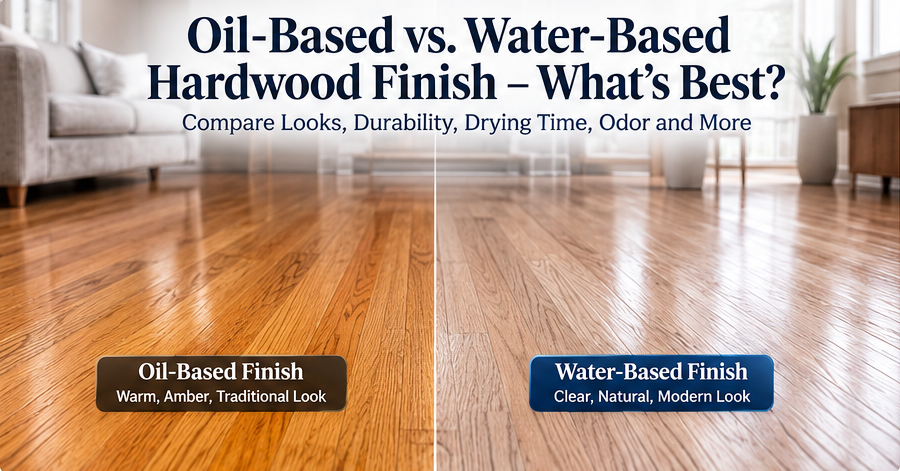
Oil-Based vs. Water-Based Hardwood Finish

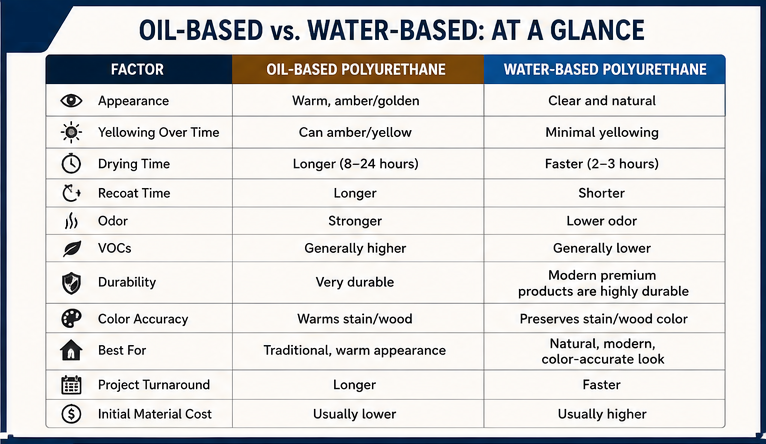
Oil-Based vs. Water-Based Hardwood Finish at a Glance

FactorOil-Based PolyurethaneWater-Based Polyurethane
AppearanceWarm, amber toneClear, natural tone
Yellowing over timeCommonMinimal
Dry time between coats8-24 hours2-3 hours
Odor during applicationStrongMuch lower
VOC contentHigherLower
DurabilityVery goodExcellent in premium formulas
Best for light or gray stainsCan amber and shift colorPreserves the color you picked
Material costUsually lowerUsually higher
Project turnaroundLongerFaster
Oil-Based vs. Water-Based Hardwood Finish Comparison chart

What Is Oil-Based Polyurethane?

Oil-based polyurethane is a resin carried in an oil and solvent base. Once it’s applied over sanded hardwood, it forms a hard, protective film as it cures. That curing process takes time, which is part of why oil-based projects tend to run longer than water-based ones.
Visually, oil-based finish adds warmth. It pulls an amber, golden tone out of the wood and deepens over the years, which is exactly why so many older homes throughout Nassau County still have that classic honey-colored oak look.

Where Oil-Based Finish Holds Up

Where It Falls Short

What Is Water-Based Polyurethane?

“Water-based” doesn’t mean the finish is just water. Water is part of the carrier system that lets the resin spread and level, then the finish cures into a protective film once the water evaporates. Older generations of water-based products earned a reputation for being thin and less durable. Modern professional-grade formulas have moved well past that.
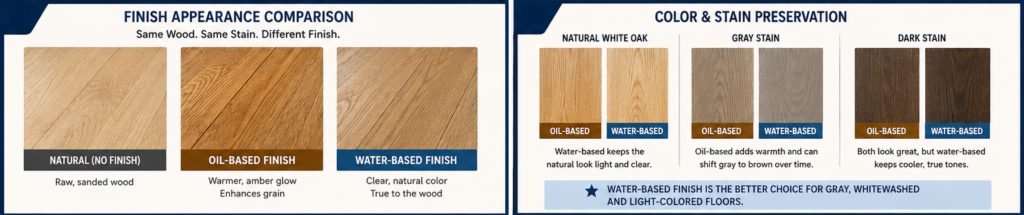
The look is the real difference homeowners notice first. Water-based finish stays clear. It doesn’t add the amber cast that oil-based does, so the wood and stain look the same on day one as they do years later.

Where Water-Based Finish Wins

What to Watch For

Which Finish Looks Better?

Oil-based finish adds warmth and depth. On red oak or a dark walnut stain, that amber cast can genuinely improve the look, especially if a traditional, old-world feel is what you’re going for.
Water-based finish does the opposite, in a good way. It keeps the floor looking like the wood and stain you actually picked, not a warmer version of it a few years down the line. That matters a lot on maple, natural white oak, and anything with a gray or whitewashed stain, where an amber cast can throw off the whole color scheme.
Oil-based vs. water-Finish appearance

Does Water-Based Polyurethane Really Last as Long as Oil-Based?

This is the biggest myth we hear in Nassau County homes, and it’s outdated advice. “Oil-based always lasts longer” was true of the water-based products sold twenty years ago. It isn’t true of the professional waterborne finishes we apply today.
Bona’s own wear testing shows its waterborne finishes holding up as well as, and in some cases outperforming, oil-modified finishes in abrasion resistance. So durability today comes down less to “oil versus water” and more to a handful of other factors.

What Actually Determines How Long a Finish Lasts

Drying Time: Oil-Based vs. Water-Based

Oil-based finish typically needs 8 to 24 hours between coats, and the whole project stretches out as a result. Water-based finish usually dries in 2 to 3 hours, which can cut real time off a refinishing job.
One important distinction, though: dry isn’t the same as cured. Even after a water-based finish feels dry to the touch, it’s still hardening underneath. Always follow your flooring contractor’s timeline before moving furniture back in or rolling out rugs.

Which Finish Has More Odor?

Oil-based polyurethane has a strong solvent smell that lingers during application and for a while after. Good ventilation helps, but it doesn’t eliminate it.
Water-based finish has a noticeably lower odor profile. It’s not scent-free, and you still need to ventilate the space properly, but most homeowners find it far easier to live near during a refinishing project. That’s a real advantage if you’re not planning to leave the house while the crew works.

Best Finish for Light-Colored Hardwood, Gray Stains, and Whitewashed Floors

This is where water-based finish separates itself completely. If you’ve picked a natural, light, gray, or whitewashed stain, an oil-based finish will slowly warm and amber that color, sometimes enough to change the whole look of the room within a couple of years.
Water-based finish protects the color you actually chose. On maple, natural white oak, and any gray or whitewashed stain, it’s the clear winner. Dark, traditional stains are more flexible, oil-based can add welcome warmth there, but water-based still holds up as a modern, color-accurate option.

Does Water-Based Cost More Than Oil-Based?

Usually, yes, at least on the gallon price. Premium water-based products cost more upfront than basic oil-based finish.
That’s only half the picture, though. Oil-based projects take longer to dry, which means more downtime, more disruption, and a longer stretch before you can move back in. Water-based finish trims that timeline down. When you compare the entire project, not just the price per can, the gap between the two narrows quite a bit.

Which Finish Is Right for Nassau County Homes?

A lot of the hardwood we refinish across Nassau County sits in homes 50 to 100 years old, with oak floors that have already seen a lifetime of sun, foot traffic, and prior refinishing jobs. Big windows and sliding glass doors are common out here too, which means UV exposure and finish clarity both matter more than they would in a home with smaller windows.
For families updating an older amber-toned floor to something lighter and more contemporary, water-based finish is usually the right call. For homeowners who want to preserve that traditional, richly colored look their floor has always had, oil-based still holds up. We see both requests regularly in Lynbrook, Oceanside, and Rockville Centre.

How Frank Cimino Flooring Approaches Hardwood Finishing

For our hardwood floor refinishing projects, we recommend a professional water-based system. It gives homeowners the clean, modern look they’re usually after, without sacrificing durability.
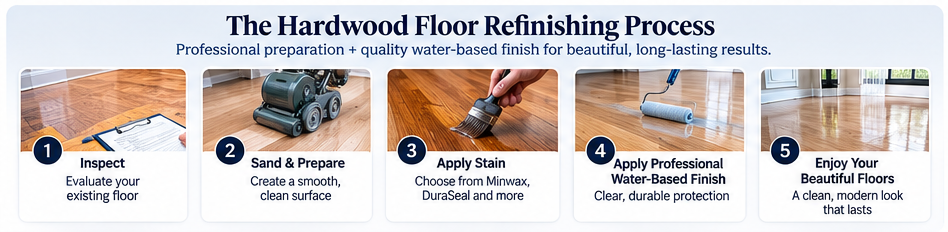
Refinishing process

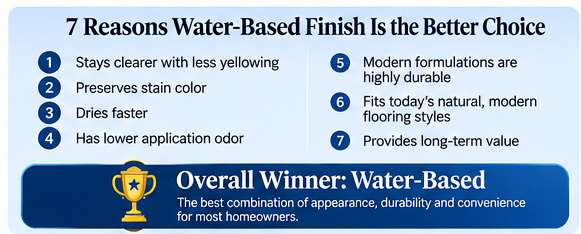
7 Reasons Water-Based Finish Is the Better Choice for Most Homeowners

When Should You Still Choose Oil-Based Polyurethane?

Water-based doesn’t win every category, and we’ll say that plainly. If you specifically want that warm, amber, traditional hardwood look, especially on a dark stain, oil-based still delivers it better than anything else on the market. It’s also worth considering if your project timeline allows for the longer drying period.
Oil-based isn’t the wrong choice. It’s simply less flexible for homeowners chasing a clear, modern, color-accurate finish.

Common Mistakes Homeowners Make When Choosing a Finish

How to Choose the Right Finish for Your Floor

Choose Water-Based If:

Choose Oil-Based If:

Final Verdict: Oil-Based vs. Water-Based Hardwood Finish

For most homeowners refinishing hardwood today, a quality professional-grade water-based finish offers the best mix of appearance, durability, drying speed, and color stability. It’s the finish we recommend most often, and the one that fits best with modern flooring trends across Nassau County.
Oil-based still wins on one specific point: traditional amber warmth. If that’s the look you want, it remains a solid, proven choice.
winner water-based polyurethane

Frequently Asked Questions

For most modern hardwood refinishing projects, yes, particularly when a clear appearance, faster drying, and lower odor matter to you.

Modern professional-grade waterborne finishes hold up as well as, and in some wear tests outperform, oil-modified finishes.

It’s far less prone to yellowing than oil-based finish, which is one of the main reasons homeowners choose it for light or gray stains.

Yes. It ambers and warms in color as it ages, which some homeowners love and others want to avoid.

Water-based finish is generally the better choice, since it preserves the lighter, cooler tone instead of adding warmth.

Water-based finish dries faster, typically within 2 to 3 hours between coats compared to 8 to 24 hours for oil-based.

Premium water-based products usually cost more per gallon, but a shorter project timeline can offset some of that difference.

It depends on the existing coating and proper surface prep. A professional should confirm compatibility before applying anything.

Most projects run a few days from inspection through sanding, staining, finishing, and drying, depending on the size of the job.

Ready to Refinish Your Hardwood Floors?

You want the clean, modern look of a water-based finish, our team can help you pick the right one for your home. We’ll inspect your floors, walk you through stain and finish options, and handle the sanding and refinishing from start to finish.
Request a free in-home estimate and find out which finish is right for your floors.