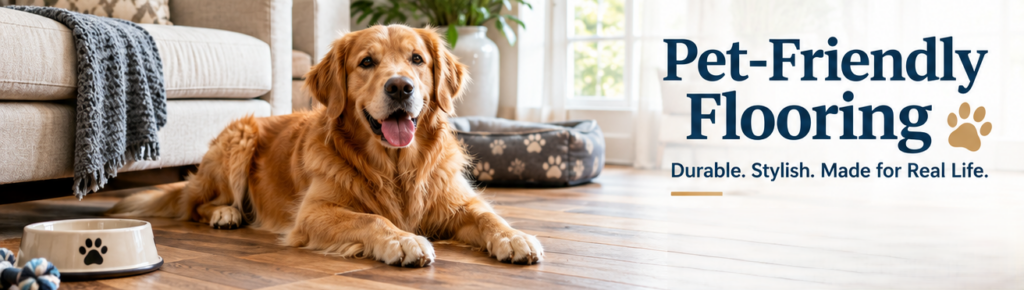

Pet-Friendly Flooring: The Best Flooring Options for Dogs & Pets

Muddy paws. A knocked-over water bowl. Nails clicking across the room during a 3 a.m. zoomie session. If you share your home with a dog, your floors deal with a lot more than regular foot traffic.
So which flooring actually holds up? At Frank Cimino Flooring, we’ve installed and refinished floors in hundreds of Nassau County homes with dogs, cats, and everything in between. Here’s what actually works, broken down by material and by the kind of pet you have.

Quick Answer

For most dog owners, luxury vinyl plank (LVP) is the best all-around pet-friendly flooring. It’s waterproof, scratch-resistant, easy to clean, and looks like real hardwood. Tile wins if durability is your only priority. Hardwood still works beautifully if you pick the right finish and stay on top of maintenance, and it has one big advantage other floors don’t: it can be professionally refinished instead of replaced.
Pet-Friendly Flooring The Best Flooring Options for Dogs Pets

What Makes a Floor Actually Pet-Friendly?

No flooring is 100% dog-proof. A large, active dog running across any surface every day will eventually leave some mark on it. The real goal is finding a floor that handles the problems pets actually cause, not one that pretends damage is impossible.
What Makes a Floor Actually Pet Friendly

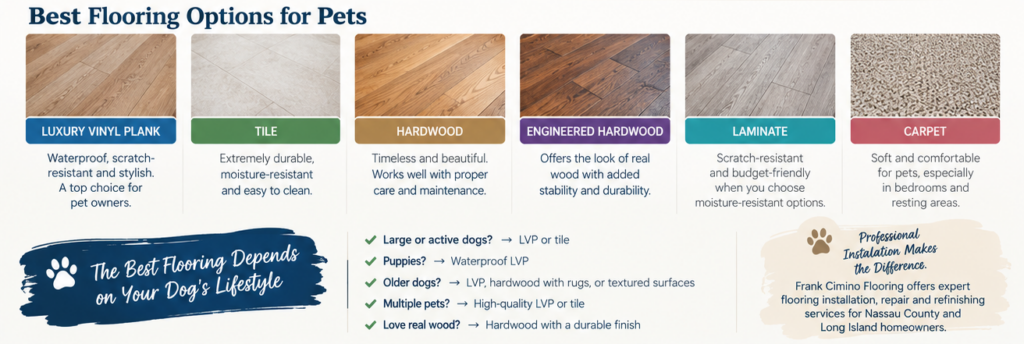
Best Flooring for Dogs: Quick Comparison

Flooring TypeWater ResistanceScratch ResistanceEasy to CleanComfortBest For
Luxury Vinyl PlankExcellentExcellent*ExcellentExcellentMost dog-owning households
Porcelain/Ceramic TileExcellentExcellentExcellentFairMaximum durability
HardwoodFairFairGoodExcellentHomeowners who want real wood
Engineered HardwoodBetter than solidGoodGoodExcellentReal-wood look with more stability
LaminateGood to Excellent**GoodGoodGoodBudget-conscious homeowners
CarpetPoor to FairFairFairExcellentBedrooms and pet resting areas

*Performance varies by product and wear layer. **Only laminate specifically rated for moisture resistance.
1. Luxury Vinyl Plank: The Best All-Around Pick for Dog Owners

If you want one floor that checks the most boxes for a busy home with dogs, start with LVP. It’s built to replicate real wood while standing up to daily abuse a lot better than actual hardwood does.

Pro Tip

Not all LVP is created equal. Check the wear layer thickness before you buy. A thicker wear layer resists scratches and dents far better than a bargain product, and a textured finish hides everyday marks better than a glossy one. “Waterproof” also doesn’t mean you can leave an accident sitting on the floor, clean it up promptly to protect the seams underneath.
Frank Cimino Flooring installs luxury vinyl plank flooring throughout Nassau County, with wood-look styles built for busy, pet-filled households. You can browse finished projects in our luxury vinyl flooring gallery.

2. Tile: The Heavy-Duty Choice

If durability is your only priority, porcelain or ceramic tile is hard to beat. It shrugs off moisture and heavy daily traffic, which is why it’s a go-to for entryways, mudrooms, and kitchens.

3. Hardwood: Can You Have Real Wood Floors With Dogs?

Yes, absolutely, but hardwood needs more thought than LVP or tile. Dog nails can scratch it, especially in spots where a dog repeatedly turns or runs. Accidents that sit too long can also stain or warp the wood.
Here’s the advantage hardwood has that nothing else on this list does: it can be professionally refinished instead of replaced. According to the National Wood Flooring Association, a full sand and refinish is the standard fix for deep scratches, dents, and worn finish, as long as the wear layer has enough material left to sand.

How to Make Hardwood More Pet-Friendly

If your existing hardwood already has scratches and dull spots, professional hardwood floor refinishing can restore it without tearing out the floor. We use premium water-based finishes selected from our stain chart options, and you can see examples in our hardwood refinishing gallery.

4. Engineered Hardwood: Real Wood With More Stability

Engineered hardwood gives you a genuine wood surface with better resistance to humidity and temperature swings than solid hardwood. It isn’t automatically dog-proof, though. Surface finish, scratch resistance, and your dog’s size and energy level still matter just as much as with solid wood.

5. Laminate: Durable, But Read the Fine Print

Modern laminate resists scratches and everyday wear surprisingly well, and it costs less than real wood or LVP. The catch for pet owners is moisture. Standard laminate can swell or warp if an accident isn’t cleaned up fast, because water can reach the core beneath the wear layer.

6. Carpet: Comfortable, But High Maintenance

Carpet gets dismissed a lot in pet-friendly flooring articles, and that’s not entirely fair. For older dogs or dogs with joint issues, carpet provides traction and cushioning that hard flooring simply can’t match. It’s a good fit for bedrooms and resting areas.
The tradeoff is maintenance. Carpet traps pet hair, dirt, odor, and allergens more than any other flooring type. According to the Indiana Department of Health, pet dander sticks to carpet fibers and stays airborne longer than on hard flooring, which is worth knowing if anyone in the house has allergies or asthma.
A practical middle ground: use hard, easy-to-clean flooring like LVP in high-traffic areas, and keep carpet or area rugs only where your dog sleeps and relaxes.

Is There Such a Thing as Dog-Proof Flooring?

Not really, and that’s worth knowing before you shop. Every flooring material has a weakness somewhere. A scratch-resistant floor might be harder underfoot. A soft, comfortable floor might be harder to clean. A waterproof floor can still scratch if you pick a low-quality product.
So instead of asking “what floor can my dog never damage,” ask a better question: what floor will handle my dog’s actual lifestyle with the least maintenance and worry?

Best Flooring by Dog Type

Large or Active Dogs

Go with LVP or tile. More traffic and more stress from running and turning means you need strong scratch resistance and solid traction.

Puppies

Waterproof LVP is the easiest option during house training. Accidents are a given, so a floor that wipes clean in seconds saves a lot of stress.

Older Dogs

Textured LVP, or hardwood with strategically placed runners, gives aging joints the traction smooth, slippery surfaces don’t.

Multiple Dogs

High-quality LVP or tile handles the extra traffic, nails, dirt, and spills that come with more than one pet in the house.

Homeowners Who Want Real Wood

Choose hardwood with a durable, water-based finish and a realistic maintenance routine. If scratches show up later, it can be professionally refinished instead of torn out.
pet friendly flooring

7 Ways to Protect Your Pet-Friendly Flooring

What's the Best Pet-Friendly Flooring Overall?

For most homes with dogs, high-quality luxury vinyl plank is the best all-around choice. It combines water resistance, scratch resistance, easy maintenance, comfort, and a wood-look design that actually looks good. Tile wins when durability is the single top priority. Hardwood stays an excellent option for homeowners who want real wood and are willing to maintain it, especially since it can be refinished rather than replaced.
The right answer ultimately depends on your dog. A large dog that sprints through the house all day has different flooring needs than a small senior dog that mostly naps in the bedroom.

Pet-Friendly Flooring Installation in Nassau County

Picking the right material is only half the job. Performance also depends on proper subfloor prep, installation technique, seams, and transitions, details that matter even more in a home with pets.
Frank Cimino Flooring has served Long Island homeowners since 1962, offering luxury vinyl plank installation, hardwood floor installation, and hardwood floor refinishing across Nassau County, including Lynbrook, Oceanside, and Rockville Centre. See our full service area or learn more about our team.
One more note if you’re refinishing an existing floor with pets in the home: the ASPCA recommends keeping pets out of the work area during any refinishing project, and low-VOC, water-based finishes are easier on everyone in the house during application. The EPA notes that VOC levels indoors can run several times higher than outdoors during projects like this, so ventilation matters, for pets and people alike.

Frequently Asked Questions

Waterproof LVP is the easiest option. It seals against moisture and wipes clean, which matters most during house training or with a senior dog who has accidents.

No, but it needs more care than LVP or tile. Trimmed nails, prompt cleanup, and a durable finish go a long way, and scratches can later be professionally sanded out.

Quality LVP with a thick wear layer resists scratches well. Cheaper, thin products scratch more easily, so check the wear layer before buying.

LVP or tile. Both handle the extra traffic, nail contact, and turning stress that come with bigger, more active dogs.

Carpet traps pet dander and allergens more than hard flooring does. If allergies are a concern, hard surfaces like LVP or tile in main living areas are usually the better choice.

In most cases, yes. Professional sanding and refinishing can remove surface scratches and restore the floor’s appearance without replacing it.

Laminate rated for moisture resistance is usually the most budget-friendly option that still holds up reasonably well to pets.

Ready for a More Pet-Friendly Floor?

Don’t choose your next floor based only on how it looks in a showroom. Think about how your dog actually uses your home: a puppy in training, a large active dog, multiple pets, an older dog with mobility issues, or a household that just wants less maintenance.
Frank Cimino Flooring can help you compare LVP, hardwood, and refinishing options built for real life with pets. Request a free in-home estimate and let’s find the right fit for your home.