
Cupping is when the edges of a board rise higher than the center, so each plank looks slightly concave. Crowning is the opposite, the center bulges higher than the edges. Both are classic signs of wood absorbing moisture unevenly. According to the National Wood Flooring Association, cupping happens specifically when a floor gains moisture, while gaps or splits show up when it loses moisture.
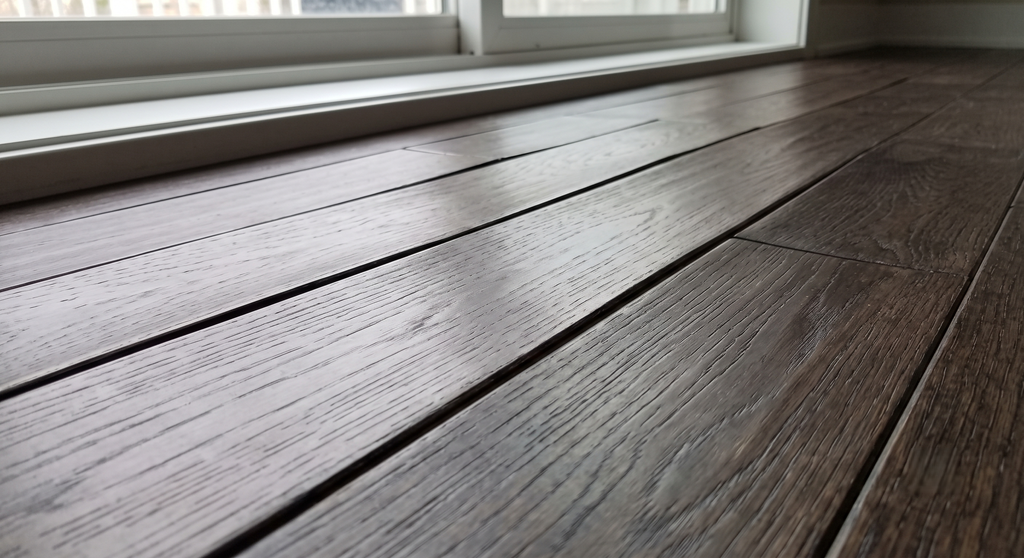
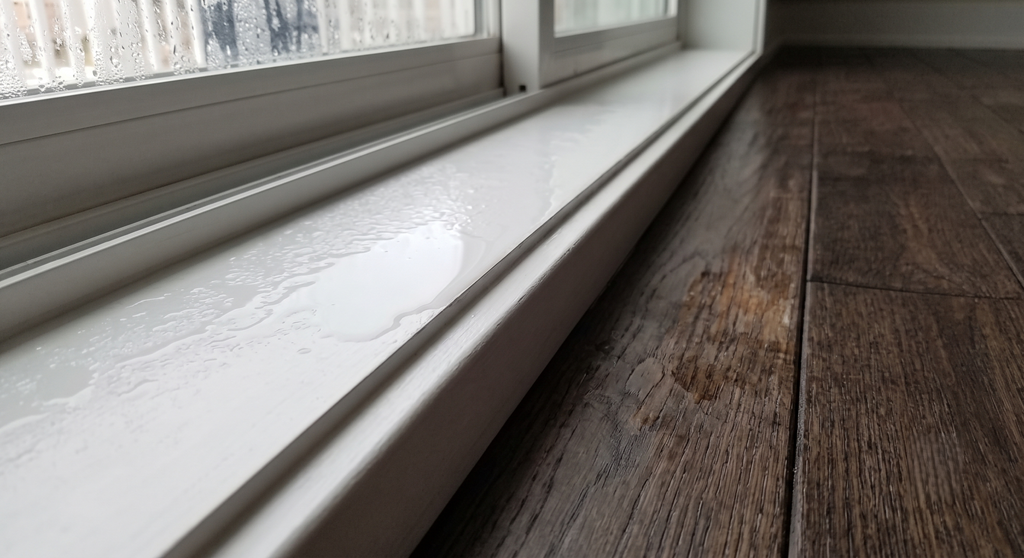
Fixing the visible flooring without fixing the moisture source is the single most common mistake we see. The boards might look fine again for a few months, then the same lifting shows up in the same spot. Find the source first, then repair the floor.
| Problem | Likely Solution |
|---|---|
| Small area of minor swelling | Repair or monitor |
| A few damaged boards | Board replacement |
| Surface-level damage only | Sanding and refinishing |
| Severe buckling | Repair or replacement, depending on extent |
| Rot or major water damage | Replacement |
| Recurring moisture problem | Fix the moisture source first, then repair |
The most common cause is water or moisture getting to the wood, from a leaking window, condensation, or a drainage problem outside. Seasonal humidity, sunlight, and installation issues can also contribute.
Yes. Water from a leaking window frame or damaged flashing can seep under the flooring and cause cupping, swelling, or staining, sometimes before you notice a leak anywhere else.
Often, yes, especially if the swelling is limited and the wood hasn’t rotted. The moisture source needs to be fixed first, then the floor can be dried, repaired, or refinished.
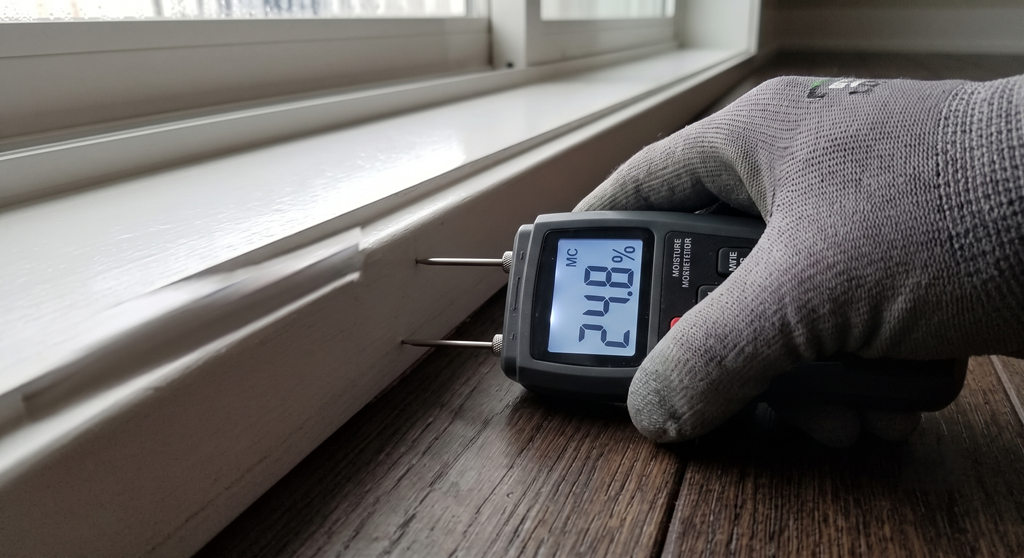
Look for cupping or crowning boards, dark stains, a musty smell, or a cloudy finish. Check the wall and window nearby too, damp drywall or peeling paint often confirms it.
Sometimes, once the wood dries and the moisture source is fixed, minor cupping can flatten back out on its own. Boards with more severe or prolonged damage usually need repair or replacement.
Surface-level damage can usually be refinished. Rot, permanent warping, or extensive subfloor damage typically means replacement is the better long-term fix.
Yes. Hardwood is sensitive to relative humidity outside the 30-50% range, and prolonged exposure to high humidity can cause boards to swell and buckle even without a direct leak.
Keep window seals and caulking in good shape, control indoor humidity, wipe up condensation, and maintain your gutters so water drains away from the house instead of toward it.