
Yes, prolonged exposure to melting snow and moisture can damage the finish and, over time, cause swelling, cupping, or discoloration. Cleaning it up promptly cuts that risk substantially.
Remove loose grit first, then clean with a hardwood-safe cleaner according to its instructions. Avoid soaking the floor or reaching for harsh household cleaning products.
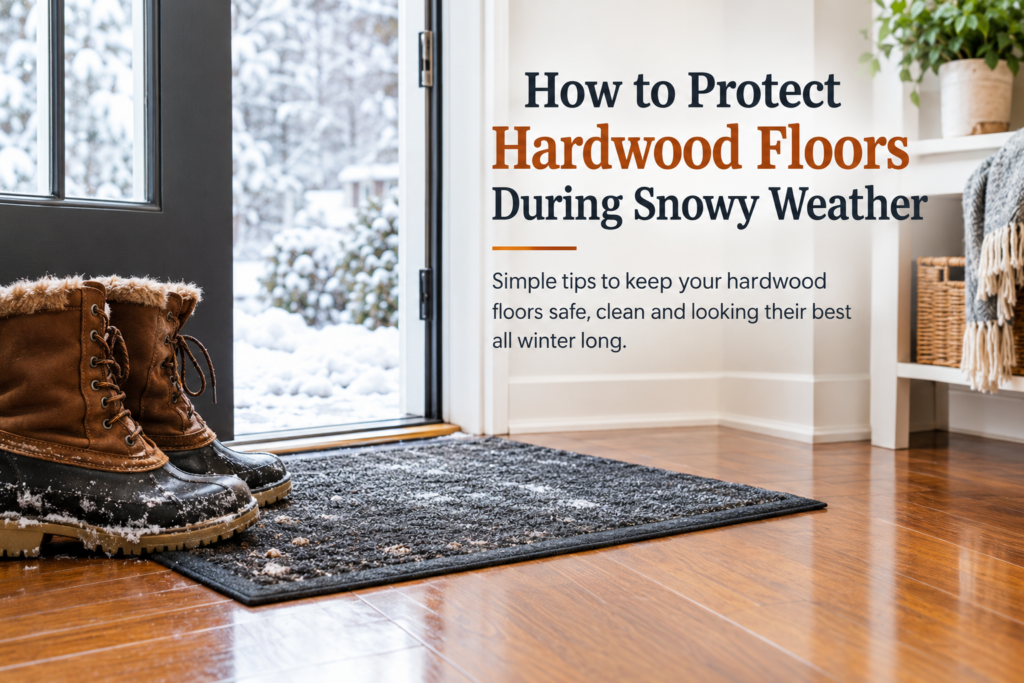
Look for an absorbent entry mat with a backing specifically approved for your floor’s finish. Keep both the mat and the floor underneath it dry, a damp mat left in place can do its own damage.
A humidifier can help when indoor air gets too dry from winter heating. Monitor relative humidity with a hygrometer and follow your flooring manufacturer’s specific guidelines rather than guessing.
Widespread dullness, a visibly worn finish, surface scratches that don’t clean off, and an uneven appearance across the room are the main signs. A professional assessment confirms whether refinishing is the right next step.
Surface-level damage can often be addressed through refinishing. Deeper moisture damage may need repair or board replacement first, the right fix depends on the actual condition of the wood underneath.