
| Flooring Type | Water Resistance | Scratch Resistance | Easy to Clean | Comfort | Best For |
|---|---|---|---|---|---|
| Luxury Vinyl Plank | Excellent | Excellent* | Excellent | Excellent | Most dog-owning households |
| Porcelain/Ceramic Tile | Excellent | Excellent | Excellent | Fair | Maximum durability |
| Hardwood | Fair | Fair | Good | Excellent | Homeowners who want real wood |
| Engineered Hardwood | Better than solid | Good | Good | Excellent | Real-wood look with more stability |
| Laminate | Good to Excellent** | Good | Good | Good | Budget-conscious homeowners |
| Carpet | Poor to Fair | Fair | Fair | Excellent | Bedrooms and pet resting areas |
*Performance varies by product and wear layer. **Only laminate specifically rated for moisture resistance.
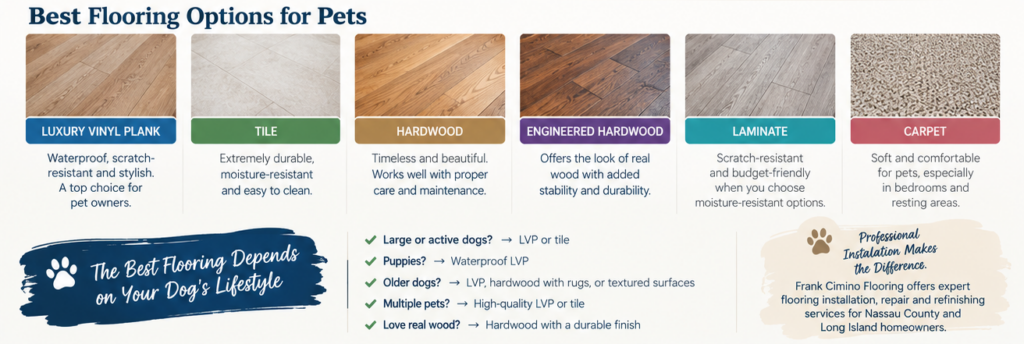
Waterproof LVP is the easiest option. It seals against moisture and wipes clean, which matters most during house training or with a senior dog who has accidents.
No, but it needs more care than LVP or tile. Trimmed nails, prompt cleanup, and a durable finish go a long way, and scratches can later be professionally sanded out.
Quality LVP with a thick wear layer resists scratches well. Cheaper, thin products scratch more easily, so check the wear layer before buying.
LVP or tile. Both handle the extra traffic, nail contact, and turning stress that come with bigger, more active dogs.
Carpet traps pet dander and allergens more than hard flooring does. If allergies are a concern, hard surfaces like LVP or tile in main living areas are usually the better choice.
In most cases, yes. Professional sanding and refinishing can remove surface scratches and restore the floor’s appearance without replacing it.
Laminate rated for moisture resistance is usually the most budget-friendly option that still holds up reasonably well to pets.